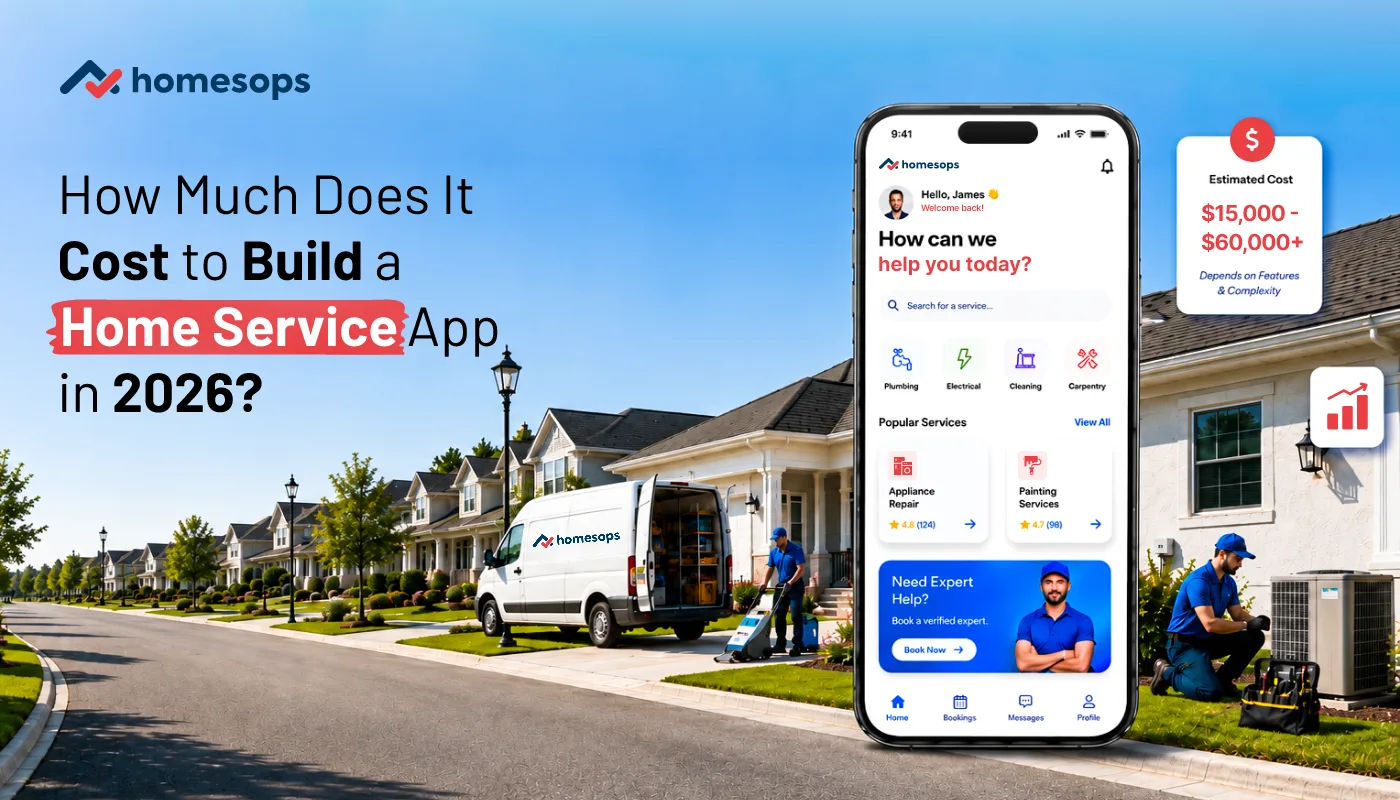
Cost of Building a Home Service App in 2026: Full Breakdown
The home service app development cost in 2026 generally ranges from $20,000 to $150,000+ for a custom platform, depending on its features, user roles, integrations, platforms and operational complexity. A focused MVP may cost between $20,000 and $45,000, while a mature multi-service platform can exceed $100,000. However, advanced dispatching, technician tracking, payments, recurring maintenance and […]
Table of Contents
August 18, 2026
The home service app development cost in 2026 generally ranges from $20,000 to $150,000+ for a custom platform, depending on its features, user roles, integrations, platforms and operational complexity. A focused MVP may cost between $20,000 and $45,000, while a mature multi-service platform can exceed $100,000.
However, advanced dispatching, technician tracking, payments, recurring maintenance and multiple applications can push a home service platform above these general averages.
HomesOps offers another route: a white-label platform designed for HVAC, plumbing, roofing, electrical and general maintenance businesses. It combines booking, technician dispatch, payments and tracking without requiring businesses to develop the entire system from scratch.
Home Service App Development Cost in 2026
- A basic custom MVP may cost $20,000 to $45,000.
- A mid-complexity platform may cost $45,000 to $90,000.
- An advanced multi-service platform may cost $90,000 to $150,000+.
- Features, integrations, platforms and user roles create the largest cost differences.
- A white-label solution such as HomesOps can reduce development time by providing an existing operational foundation.
How Much Does It Cost to Build a Home Service App in 2026?
A custom home service app may cost anywhere from $20,000 to more than $150,000 in 2026. The following ranges assume professional product design, mobile development, backend engineering, testing and deployment.
| App scope | Estimated cost | Estimated timeline | Typical inclusions |
| Basic MVP | $20,000–$45,000 | 3–5 months | Registration, service catalogue, booking, basic payments and admin panel |
| Mid-complexity platform | $45,000–$90,000 | 5–8 months | Customer and technician apps, GPS, scheduling, notifications, CRM and analytics |
| Advanced platform | $90,000–$150,000+ | 8–14+ months | AI dispatch, subscriptions, multiple locations, dynamic pricing and third-party integrations |
| White-label solution | Scope-dependent subscription or licence | Days or weeks | Existing platform customized with business branding and selected configurations |
App-store fees, cloud hosting, mapping usage, SMS charges, payment-gateway fees, marketing and long-term maintenance may remain outside the initial development quotation unless explicitly included.
What Factors Affect Home Service App Development Cost?
The cost of on demand home services app development is mainly affected by scope, technical complexity and the number of connected workflows.
1. Number of applications and user roles
A complete platform may require:
- A customer mobile app
- A technician or service-provider app
- A web-based administrator dashboard
- A dispatcher portal
- A business-owner dashboard
Building separate experiences for several user groups requires more design, permissions, testing and backend logic than developing one simple booking application.
2. Feature complexity
Standard booking and profile features are less expensive than intelligent dispatch, route planning, live tracking, recurring service plans or automated pricing.
HomesOps identifies AI-powered dispatch, GPS tracking, technician applications, CRM, automated notifications, digital invoicing, payments, analytics and multi-location support as important field-service capabilities. Each feature creates additional development, integration and testing work in a custom build.
3. Platforms and devices
Developing separate native applications for iOS and Android generally requires more platform-specific work. Cross-platform technologies may reduce duplicated development by allowing teams to reuse code.
Flutter supports mobile, web and desktop applications from a shared codebase, while React Native allows common features to be written once for native platforms such as Android and iOS. The right choice depends on performance requirements, existing expertise and required device capabilities.
4. Third-party integrations
A home service booking software platform may connect with:
- Payment gateways
- Accounting software
- Maps and navigation services
- CRM platforms
- SMS and email providers
- Identity-verification tools
- Inventory systems
- Marketing platforms
Every integration introduces API configuration, data mapping, testing, error handling and possible usage charges.
5. Design and customization
A standard interface based on an established design system usually costs less than a heavily customized experience with unique animations, dashboards and service flows.
6. Security and scalability
Role-based access, encrypted data, secure payments, audit logs, backups and scalable infrastructure increase initial effort but reduce operational and security risks as the platform grows.
What Is the Cost Difference Between a Custom Home Service App and a White-Label Solution?
A custom app typically requires a larger upfront investment because its interfaces, backend, workflows and integrations are developed specifically for one business. A white-label solution uses an existing platform that is rebranded and configured for the company.
| Area | Custom development | White-label solution |
| Upfront cost | Usually higher | Usually lower |
| Launch time | Commonly several months | Commonly days or weeks |
| Customization | Extensive | Limited to supported options |
| Product ownership | Depends on contract | Core platform usually remains vendor-owned |
| Maintenance | Managed by business or developer | Usually managed by platform provider |
| Technical risk | Higher during initial development | Lower because core functions already exist |
Can You Build a Home Service App With an MVP Budget?
Yes. A home service business can develop an MVP by limiting the first release to one clear booking and fulfilment journey.
A practical MVP may include:
- Customer registration
- Service selection
- Address and time-slot selection
- Booking confirmation
- Technician assignment
- Basic payment processing
- Notifications
- Administrator management
Features such as AI dispatch, loyalty programmes, subscriptions, multi-location controls and advanced analytics can be introduced after the business validates demand.
An MVP budget should still include testing, security and basic operational controls. Removing essential quality assurance may reduce the quotation but can increase failures, customer complaints and rework after launch.
How Do Home Service Apps Make Money?
Home service apps commonly earn revenue through commissions, service charges, subscriptions, lead fees or direct service sales.
Common monetization models include:
- Commission model: The platform retains a percentage of each completed booking.
- Subscription model: Service providers pay monthly or annual access fees.
- Lead-fee model: Professionals pay for qualified customer enquiries.
- Convenience fee: Customers pay an additional platform or booking charge.
- Featured placement: Providers pay for higher visibility within the marketplace.
- Direct-service model: The business employs or contracts technicians and retains the service revenue.
- Maintenance plans: Customers pay recurring fees for scheduled home maintenance.
The business model should be finalized before development because it affects payments, provider settlements, invoices, refunds, taxes and reporting.
What Technology Stack Is Used to Build a Home Service App?
A home service platform usually combines a mobile framework, web frontend, backend, database, cloud infrastructure and third-party APIs.
A possible technology stack includes:
| Layer | Common options |
| Customer and technician apps | Flutter, React Native, Swift or Kotlin |
| Admin dashboard | React, Angular or Vue.js |
| Backend | Node.js, Java, .NET or Python |
| Database | PostgreSQL, MySQL or MongoDB |
| Cloud infrastructure | AWS, Microsoft Azure or Google Cloud |
| Real-time updates | WebSockets, Firebase or similar messaging services |
| Maps and tracking | Google Maps Platform or another mapping provider |
| Payments | Stripe, PayPal or a regional payment gateway |
| Notifications | Firebase Cloud Messaging, SMS and email APIs |
There is no universally correct technology stack. The selection should reflect expected traffic, available expertise, integration requirements, security needs and long-term maintenance plans.
How Can You Reduce the Cost of Home Service App Development?
The safest way to reduce cost is to simplify the first release without removing the core service workflow.
Start with one market, a limited service catalogue and essential user roles. Use a cross-platform framework where appropriate, select proven third-party services and postpone nonessential features until customer behaviour provides evidence for them.
Businesses can also compare three approaches:
- Building a focused custom MVP
- Configuring a white-label platform
- Using a hybrid model with a ready-made core and selected custom integrations
A clear specification reduces revisions and prevents teams from pricing features that the first version does not need.
What Features Are Required for a Successful Home Service App?
A successful home maintenance app should make booking simple for customers while helping the business manage technicians, schedules and payments.
Core features normally include:
- Service search and selection
- Customer accounts
- Real-time availability
- Booking and rescheduling
- Technician profiles
- Automated assignment or dispatch
- Location and arrival tracking
- Secure payments
- Estimates and digital invoices
- Push, SMS or email notifications
- Ratings and feedback
- Administrator dashboard
- Performance reporting
Advanced platforms may also include recurring maintenance, inventory tracking, service contracts, multiple branches, intelligent dispatching and CRM automation.
Conclusion
Building a home service app in 2026 requires balancing budget, speed, features, and long-term scalability. A focused MVP can help validate demand, while a custom platform offers greater flexibility for complex operations. White-label home service software may suit businesses that want to launch faster with lower development risk.
Before choosing an approach, define the required user roles, workflows, integrations, security needs, and maintenance plan. A clear scope makes cost estimates more reliable and prevents unnecessary development expenses later for businesses.
Launch Your Home Service App Faster Without Building from Scratch
Use HomesOps to launch, manage, and scale your branded service platform faster.
Frequently Asked Questions
A custom home service app may cost approximately $20,000 to $150,000+ in 2026. The final figure depends on features, platforms, user roles, integrations and technical complexity. This range excludes unspecified expenses such as marketing, third-party subscriptions and long-term maintenance.
The main cost factors are the number of applications, feature complexity, design requirements, development location, technology stack, integrations, security and scalability. Real-time GPS tracking, automated dispatch, payment settlements and multi-location operations usually require more work than basic booking features.
A focused MVP may take approximately three to five months, while a mid-complexity custom platform may require five to eight months. An advanced marketplace can take eight to fourteen months or longer. A pre-built white-label platform may launch much faster because its core technology already exists.
Reduce costs by defining a smaller MVP, prioritizing one booking journey, limiting integrations and using cross-platform development where appropriate. A white-label platform may also reduce initial development work. Security, testing and essential operational features should not be removed merely to lower the quotation.
Essential features include service discovery, booking, scheduling, technician assignment, payments, notifications, tracking and an administrator dashboard. Depending on the business, the platform may also need recurring maintenance plans, CRM, digital invoices, customer reviews, analytics and multi-location management.
Discuss Your Project
Latest Blogs
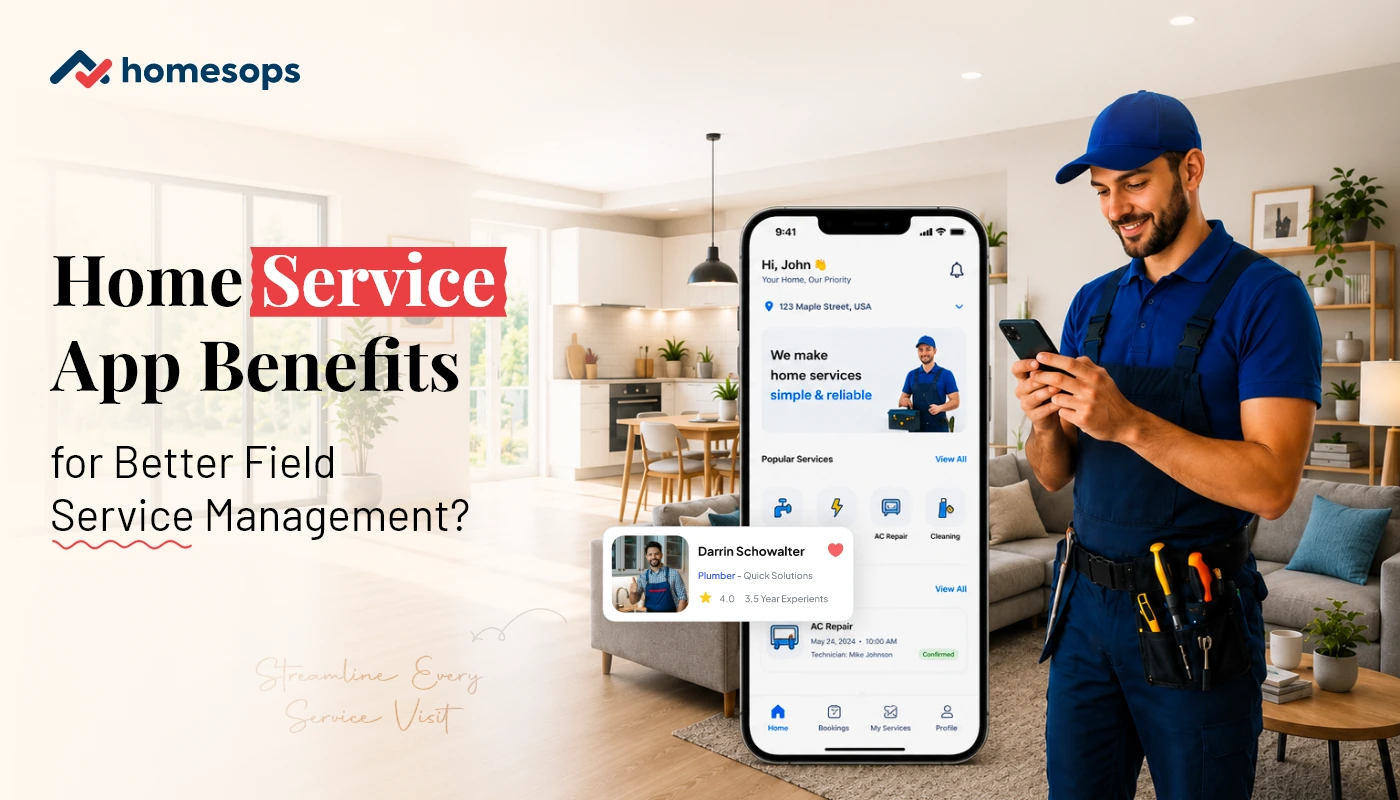
How Home Service Apps Improve Field Service Management Efficiency?
A home services app improves field service management efficiency by automating scheduling, dispatch, job tracking and customer communication, replacing manual processes that slow technicians down and cost businesses revenue. For HVAC, plumbing, roofing and handyman... Read more
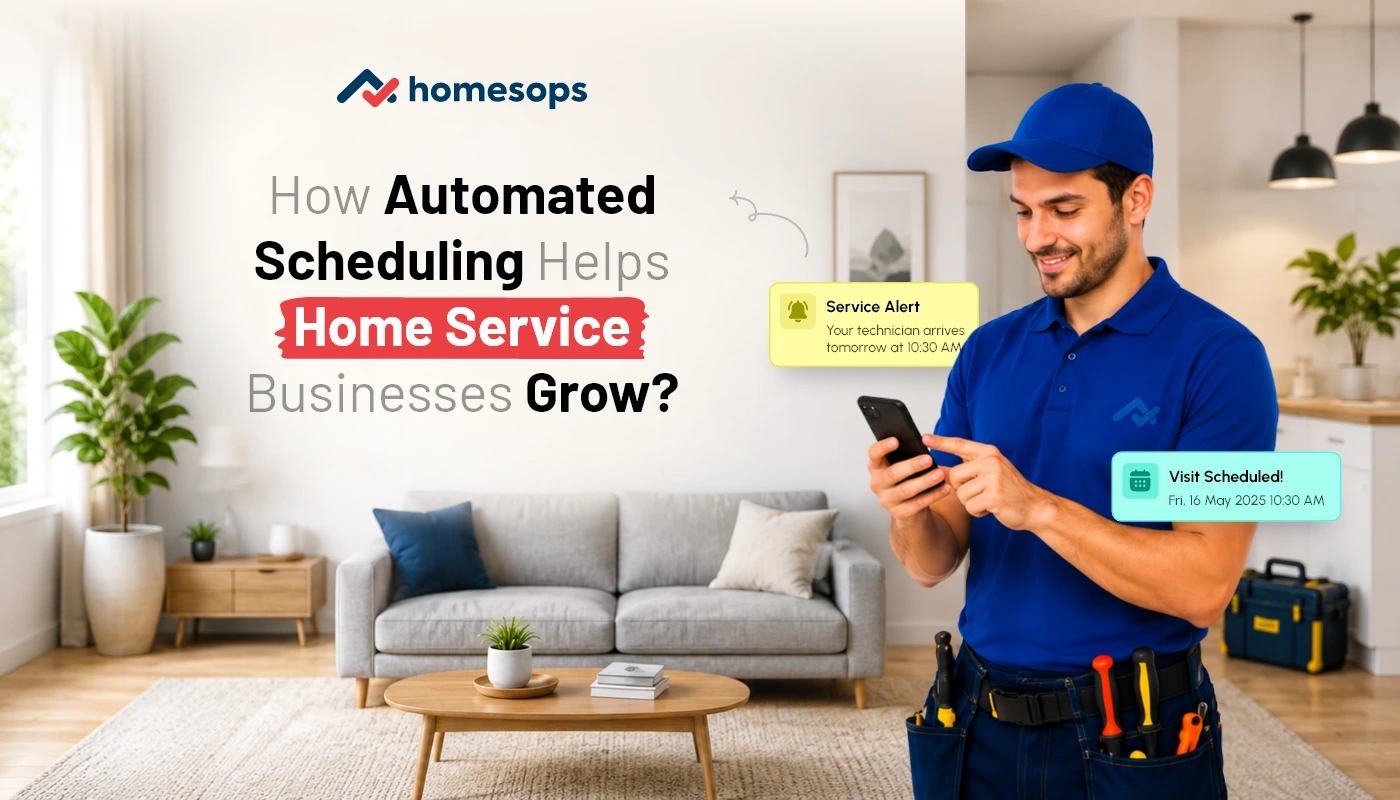
How Home Service Businesses Can Automate Booking and Scheduling?
Home service businesses can automate booking and scheduling by using a centralized platform that lets customers select services, view available time slots, confirm appointments, receive reminders and track technicians without calling the office. The same... Read more
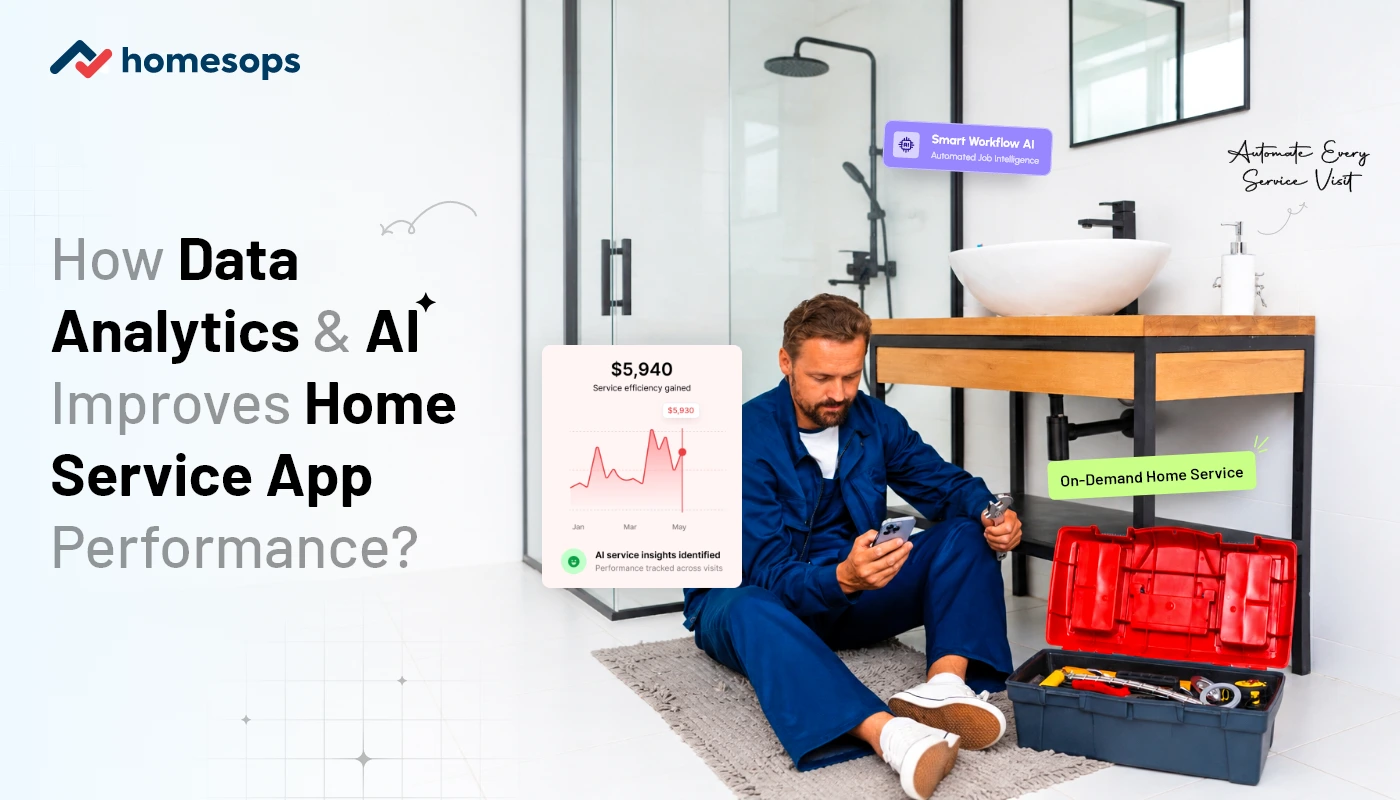
How AI & Data Analytics Improve Customer Experience in Home Services Apps
Customer expectations in home services have changed. People no longer want to call multiple times, wait for vague arrival windows, explain the same issue again, or wonder when a technician will show up. They want... Read more