How Home Service Apps Improve Field Service Management Efficiency?
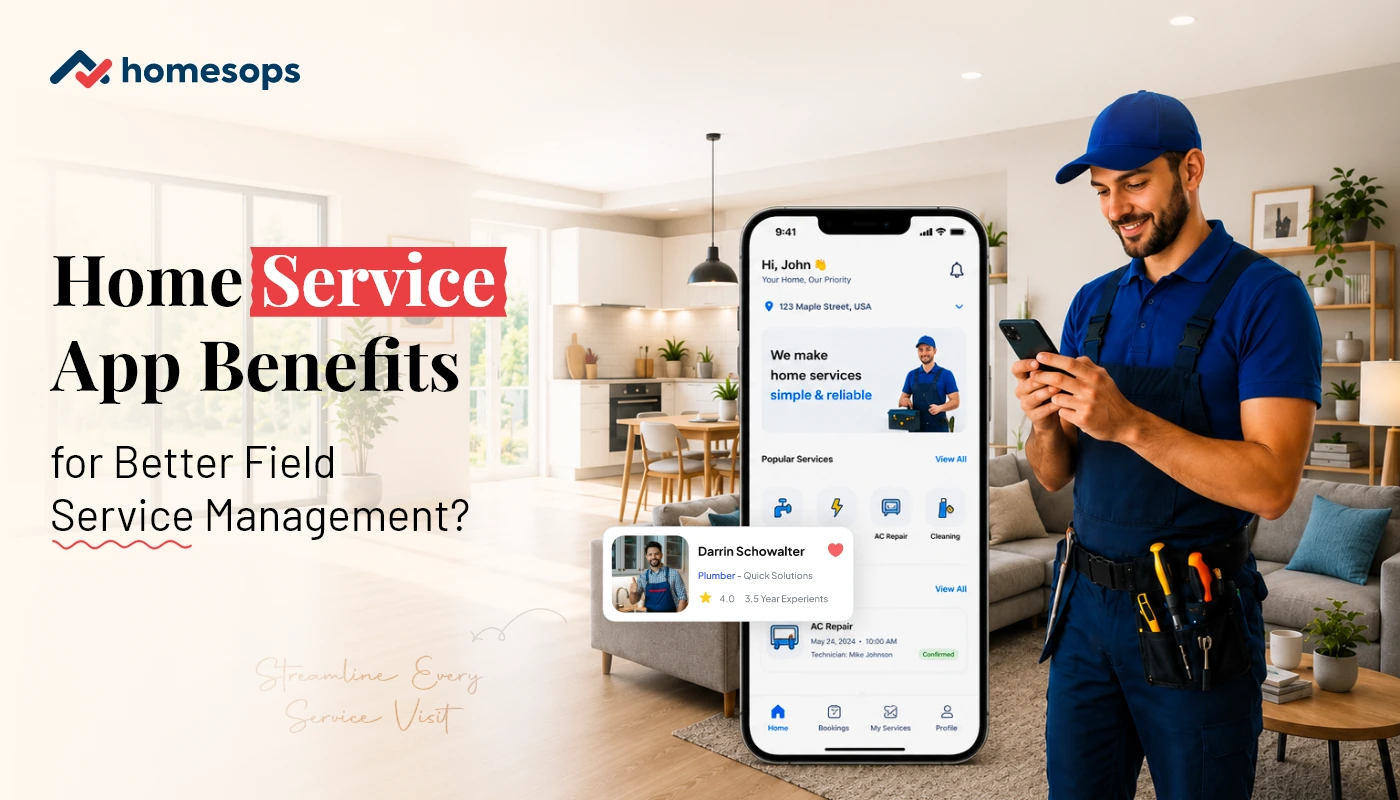
A home services app improves field service management efficiency by automating scheduling, dispatch, job tracking and customer communication, replacing manual processes that slow technicians down and cost businesses revenue. For HVAC, plumbing, roofing and handyman businesses, switching from disconnected systems to a dedicated-on demand home services platform directly reduces missed jobs, scheduling errors and idle […]
Table of Contents
July 13, 2026
A home services app improves field service management efficiency by automating scheduling, dispatch, job tracking and customer communication, replacing manual processes that slow technicians down and cost businesses revenue. For HVAC, plumbing, roofing and handyman businesses, switching from disconnected systems to a dedicated-on demand home services platform directly reduces missed jobs, scheduling errors and idle technician time.
Field service teams lose hours every day to manual coordination. A purpose-built home maintenance app consolidates every operational task, from booking to payment, into one system, giving dispatchers, technicians and customers a single source of truth. This guide explains exactly how that works, what features matter most and why businesses of every size benefit from making the switch.
Key Takeaways:
- Home service apps automate scheduling, dispatch and payment, eliminating hours of daily admin work.
- AI-powered dispatch in platforms like HomesOps matches jobs to technicians by skill, location and workload.
- Real-time GPS tracking and automated customer alerts reduce no-shows and inbound status calls.
- Small service businesses benefit as much as large ones, AI scheduling balances workloads for any team size.
- Built-in CRM and analytics help owners identify revenue gaps and improve technician utilization rates.
What Is Field Service Management and How Do Home Service Apps Improve It?
Field service management (FSM) is the process of coordinating a mobile workforce, including technicians, installers, or repair crews, to deliver services at customer locations. It covers scheduling, dispatching, job tracking, parts management, invoicing and customer communication.
A home services app improves field service management by digitizing and automating each of these processes. Instead of coordinating jobs through phone calls, spreadsheets, or whiteboards, dispatchers use a real-time dashboard to assign jobs, track technicians via GPS and send automated updates to customers. Technicians receive job details, customer history and navigation links directly on their mobile devices, eliminating the need to return to the office between calls.
HomesOps, a white-label home services platform trusted by 1,200+ service businesses globally, enables businesses to launch a fully branded app for home repair services in as few as 10 days. Its AI dispatch engine assigns jobs based on technician skill, proximity and current workload, reducing assignment errors and response times simultaneously.
How to Improve Service Management?
Improving service management starts with replacing disconnected, manual workflows with an integrated digital system. The most impactful steps for home service businesses are-
- Centralize job data- Use a single platform to store customer information, job history, technician schedules and invoices. Fragmented tools create data gaps that lead to errors and missed revenue.
- Automate scheduling and dispatch- An app for home repair services with AI dispatch assigns the right technician to the right job automatically, reducing dispatcher workload and eliminating human error.
- Give technicians mobile access- Field staff should view job details, update statuses, capture photos and collect digital signatures from their phones instead of paper forms handed out at the start of each day.
- Automate customer communication- Send booking confirmations, technician ETA alerts and post-service follow-ups automatically. This reduces inbound status calls significantly in most implementations.
- Track performance with real-time dashboards- Monitor job completion rates, technician utilization, revenue trends and customer satisfaction to identify bottlenecks before they escalate.
HomesOps integrates all five of these capabilities into one platform, including a built-in CRM, AI chatbot, analytics dashboard and payment processing, eliminating the need for multiple disconnected tools.
How to Improve Service Efficiency?
Service efficiency in field operations is measured by how many jobs a technician completes per day, how quickly they respond to new bookings and how little time is wasted on travel, paperwork, or waiting for instructions.
A home maintenance app improves service efficiency through five specific mechanisms-
1. Intelligent Job Routing
AI dispatch algorithms calculate the shortest route between jobs, group nearby appointments and account for estimated job duration. This alone can meaningfully increase daily job completions per technician, particularly in businesses with dense service areas.
2. Elimination of Manual Paperwork
Technicians using a mobile home services app complete digital checklist, attach before-and-after photos and generate invoices on-site. What previously required overnight office processing is completed in minutes on a mobile device at the job location.
3. Real-Time Parts and Inventory Visibility
Technicians arrive prepared when job requirements are communicated digitally in advance. Apps that integrate with inventory systems reduce costly return trips caused by missing materials or incorrect parts.
4. Automated Customer Updates
Push notifications and SMS alerts for booking confirmation, technician dispatch, ETA and job completion reduce the inbound calls that interrupt dispatchers and technicians during active jobs.
5. Faster Payment Collection
On demand home services platforms with built-in payment processing allow technicians to collect payment at the point of service, reducing the receivables cycle from days or weeks to hours and improving cash flow predictability for the business.
What Are the Benefits of Field Service Management?
Structured field service management, supported by a dedicated home services app, produces measurable operational and financial improvements across teams of every size-
- Higher technician utilization- AI scheduling eliminates idle time between jobs, increasing billable hours per technician per day.
- Fewer scheduling errors- Automated booking and dispatch remove double-bookings, missed appointments and mis-assigned technicians.
- Lower operational costs- Digital workflows reduce administrative overhead, paper costs and the labor required to coordinate field teams manually.
- Improved customer retention- Customers who receive real-time updates, clear invoices and efficient service are significantly more likely to rebook and refer others.
- Scalable growth- A platform like HomesOps supports multi-location management, allowing businesses to expand to new territories without proportionally increasing back-office headcount.
- Data-driven decisions- Real-time dashboards surface revenue trends, technician performance data and service demand patterns, giving owners the insight to optimize pricing, staffing and marketing investment.
Businesses using HomesOps report reductions in scheduling coordination time and faster average response to new job requests compared to businesses using manual or partially digital systems. This is a direct result of AI dispatch and mobile-first technician workflows.
What Features Should a Home Service App Have for Efficient Field Service Management?
Not all home repair apps deliver the same operational value. The features that directly drive field service efficiency are-
- AI-powered dispatch- Automatically assigns jobs based on technician skill, location and real-time workload instead of simply assigning the first available technician.
- GPS tracking and live job status- Gives dispatchers and customers real-time visibility into technician location and job progress.
- Mobile technician app- Allows field staff to receive job details, update statuses, upload photos and collect signatures without office visits.
- Integrated CRM- Stores customer contact details, service history and communication logs, enabling personalized service and proactive follow-up.
- Automated notifications- Sends booking confirmations, ETA alerts and completion summaries to customers without manual dispatcher involvement.
- Digital payments and invoicing- Enables on-site payment collection via card, wallet, or ACH, with automatic invoice generation and receipt delivery.
- Analytics dashboard- Tracks job completion rates, technician utilization, revenue by service type and customer satisfaction trends.
- Multi-location support- Manages jobs, technicians and performance across multiple branches from a single centralized dashboard.
HomesOps includes all of these features in its white-label platform, along with an AI chatbot for 24/7 customer booking support, a voice assistant for hands-free technician interaction and API integrations with CRMs, QuickBooks and third-party payment gateways.
How Do Home Service Apps Help Technicians Complete More Jobs Each Day?
Technicians complete more jobs when they spend less time waiting for instructions, traveling inefficiently, handling paperwork, or returning to the office between calls. A home services app addresses all four.
With AI-optimized routing, technicians follow a schedule built around geographic clustering, which minimizes drive time between appointments. In active service areas, this can recover significant productive time per technician each day.
Digital job cards delivered to the technician’s mobile device include customer history, service requirements, parts needed and site access information. This eliminates the pre-job phone briefing that typically adds unnecessary time per appointment. Post-job, technicians complete digital checklists and collect payment on-site rather than submitting paper invoices for later processing.
For businesses using HomesOps, the mobile app supports real-time job status updates, photo uploads and customer signature capture, keeping the technician productive in the field throughout the entire workday.
Can Home Service Apps Reduce Scheduling and Dispatch Errors?
Yes. Scheduling and dispatch errors in home service businesses are almost always caused by manual processes- phone bookings that don’t sync to the master schedule, technician assignments made without checking availability, or jobs booked in locations that conflict with existing routes.
An on demand home services app eliminates these failure points by-
- Syncing bookings in real time across web, mobile and backend systems, so no appointment exists only in one place or one person’s notebook.
- Checking technician availability, skill match and location before confirming each assignment automatically.
- Sending immediate confirmation to both the customer and the assigned technician, creating a shared, verifiable record of the appointment.
- Flagging conflicts, overlapping appointments, or unassigned jobs before they become missed service calls.
HomesOps users can manage bookings across multiple service locations from a single dashboard. Each branch’s schedule, technician pool and job history are maintained separately, preventing cross-location assignment errors common in businesses managing multiple teams manually.
Are Home Service Apps Suitable for Small Service Businesses?
Yes. Home service apps are equally effective for small operations as for large ones — and in several ways, small businesses benefit more immediately because the efficiency gains are proportionally larger relative to their team size.
A three-technician plumbing business that eliminates two hours of daily scheduling and dispatch coordination per person recovers the equivalent of a part-time administrative role. A solo HVAC technician using a home maintenance app with automated booking and payment collection removes the need for a separate office function entirely.
HomesOps explicitly supports small teams through its AI scheduling feature, which automatically balances workloads across small crews and reduces idle time with the same dispatch logic that serves enterprise-scale field operations. The platform is designed to launch within 7–10 days with no technical development required, making it accessible to businesses without in-house IT capability.
Conclusion- The Operational Case for a Home Services App
Field service management efficiency is not a technology problem it is a coordination problem. Manual scheduling, disconnected communication and paper-based workflows are what slow home service businesses down. A purpose-built home services app solves each of these by connecting booking, dispatch, job execution and payment in one integrated system.
Businesses using HomesOps gain AI-powered dispatch, a branded mobile technician app, real-time customer notifications and an analytics dashboard all deployable within 10 days under their own brand. Whether you operate a single-technician home repair business or a multi-location HVAC franchise, the efficiency gains from switching to a dedicated on demand home services platform compound quickly- fewer errors, more completed jobs, faster payment and more satisfied customers.
To see how HomesOps can improve your field service operations, visit homesops.com or book a free demo with the team today.
Turn Every Service Call into a Revenue Opportunity
Launch smarter dispatch, faster bookings, and seamless technician workflows with HomesOps.
Frequently Asked Questions
Field service management is the coordination of mobile technicians delivering services at customer locations, covering scheduling, dispatch, tracking, invoicing and communication. Home service apps improve it by automating each function in one platform — reducing manual errors, speeding up response times and giving dispatchers and technicians real-time visibility into every active job.
The most important features are AI-powered dispatch, real-time GPS tracking, a mobile technician app, integrated CRM, automated customer notifications, digital invoicing and payment, an analytics dashboard and multi-location support. Platforms like HomesOps combine all of these in a single white-label system that businesses can launch within 10 days under their own brand.
Apps reduce time spent on travel, paperwork and waiting for instructions. AI-optimized routing clusters jobs geographically to minimize drive time. Digital job cards eliminate pre-job phone briefings. On-site invoicing and payment collection remove post-job administrative tasks. Together, these changes recover significant productive technician time per day.
Yes. Apps eliminate the manual processes that cause errors phone bookings that don’t sync, assignments made without checking availability and routes that ignore geography. Real-time booking sync, automated availability checks and instant confirmation to both customers and technicians create a shared, accurate record of every appointment.
Yes. Small businesses often see the fastest return because efficiency gains are proportionally larger for small teams. A solo technician or a three-person crew that automates scheduling, dispatch and payment collection recovers hours of administrative time each week. Platforms like HomesOps are designed to launch in under 10 days without requiring technical expertise.
Discuss Your Project
Latest Blogs
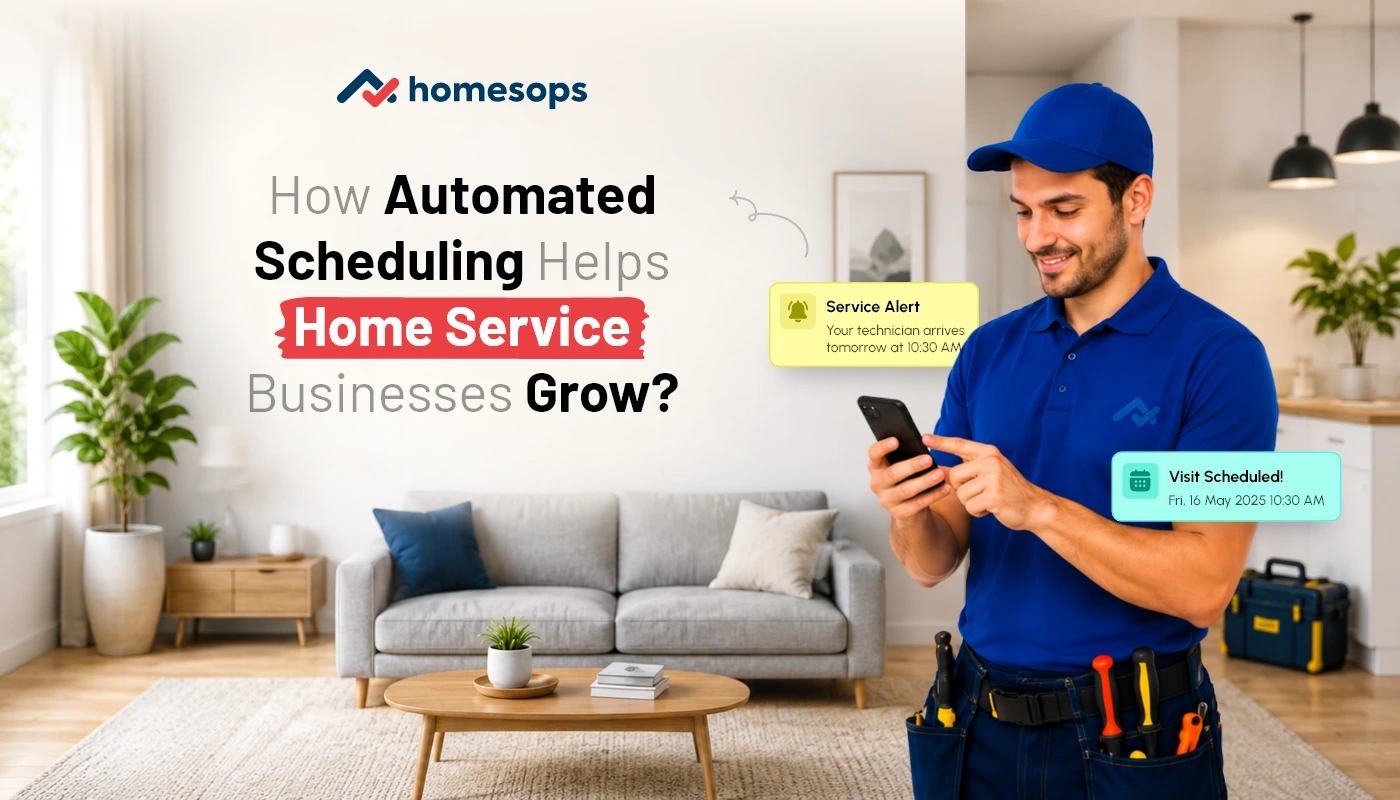
How Home Service Businesses Can Automate Booking and Scheduling?
Home service businesses can automate booking and scheduling by using a centralized platform that lets customers select services, view available time slots, confirm appointments, receive reminders and track technicians without calling the office. The same... Read more
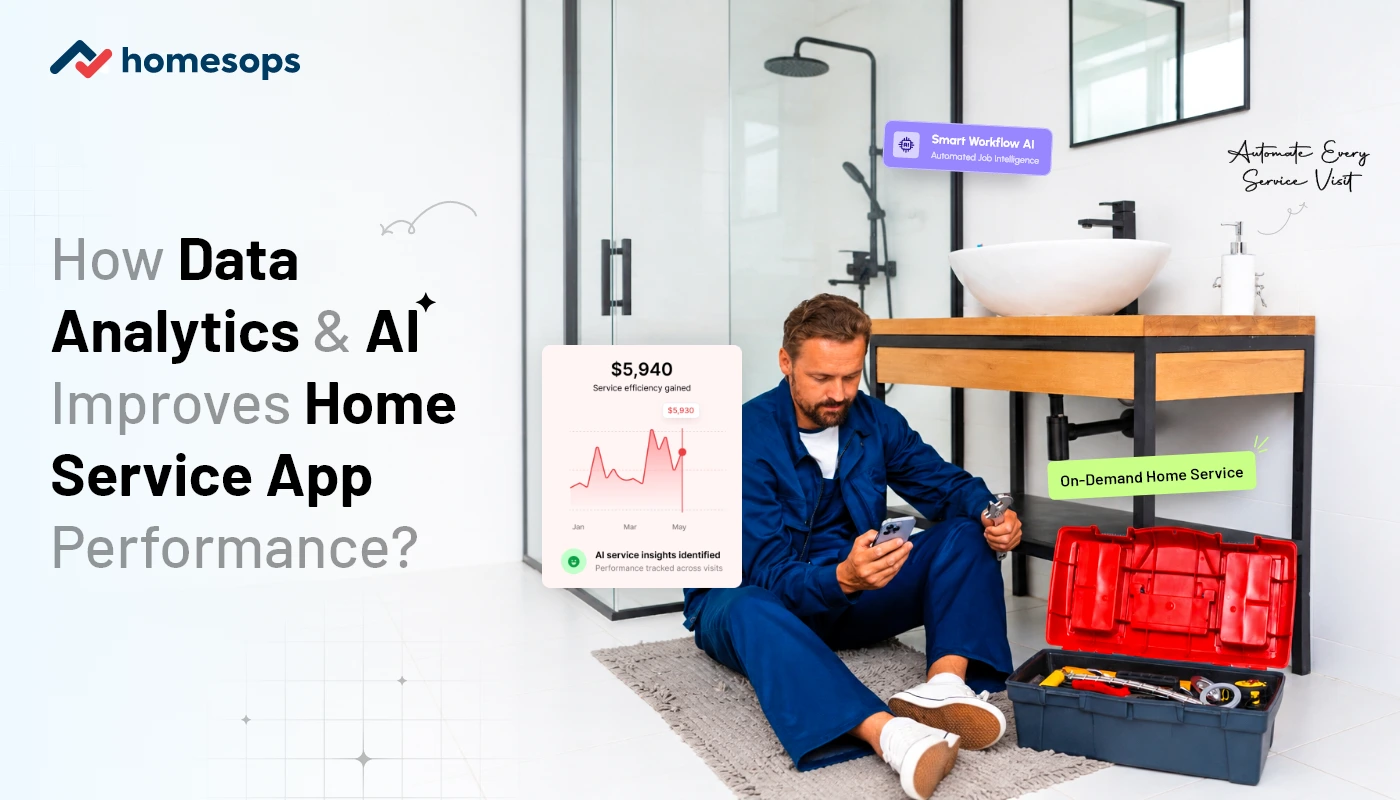
How AI & Data Analytics Improve Customer Experience in Home Services Apps
Customer expectations in home services have changed. People no longer want to call multiple times, wait for vague arrival windows, explain the same issue again, or wonder when a technician will show up. They want... Read more
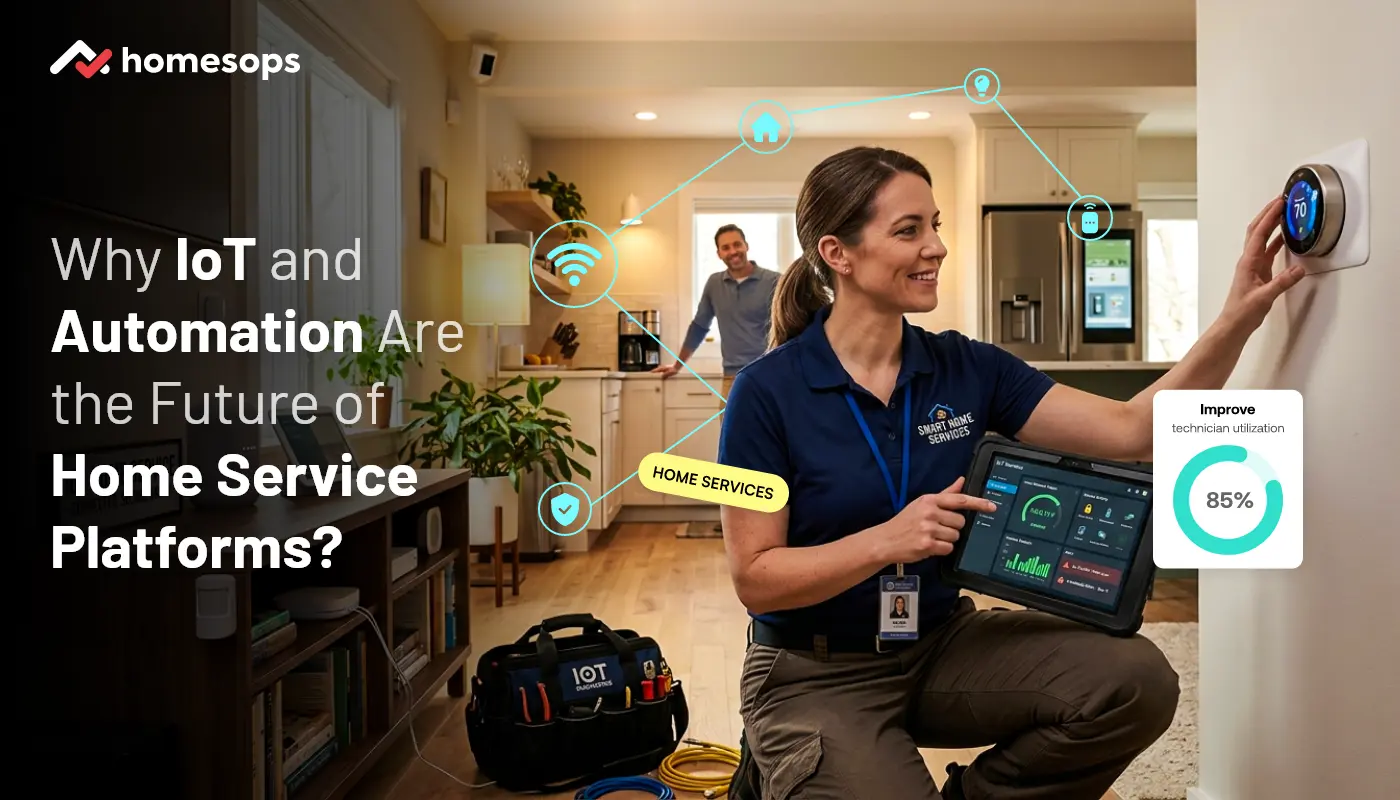
IoT, Automation & Predictive Maintenance: The Future of Home Services Platforms
The home services industry is no longer just about fixing problems it’s about preventing them before they happen. From HVAC systems that alert technicians before failure to plumbing systems that detect leaks in real time,... Read more