How Home Services Apps Are Transforming the Service Industry?
The service industry used to run on phone calls, referrals, and “call me when you’re free” scheduling. It worked until it didn’t. Customers became busier, expectations became faster, and trust became harder to earn in a world full of unknown vendors and inconsistent pricing. That’s exactly where home services apps stepped in and changed the […]
Table of Contents

January 14, 2026
The service industry used to run on phone calls, referrals, and “call me when you’re free” scheduling. It worked until it didn’t. Customers became busier, expectations became faster, and trust became harder to earn in a world full of unknown vendors and inconsistent pricing.
That’s exactly where home services apps stepped in and changed the rules.
Today, a customer can book an electrician in minutes, track arrival time like a food delivery, pay securely inside the app, and leave a review that influences future bookings. On the other side, service providers can manage leads, routes, availability, payments, and repeat customers without juggling calls and spreadsheets.
This shift is bigger than convenience. It’s a complete home services app transformation of how demand is created, how trust is built, and how work is delivered.
In this blog, we’ll break down what’s driving this change, how apps are reshaping operations, what features are powering growth, and how businesses can win in the evolving home service app industry.
How Are Home Services Apps Changing the Traditional Service Industry?
Home services apps are bringing a fundamental shift in how the service industry operates. What was once dependent on phone calls, local referrals, and manual coordination is now driven by digital platforms, real-time access, and structured service workflows.
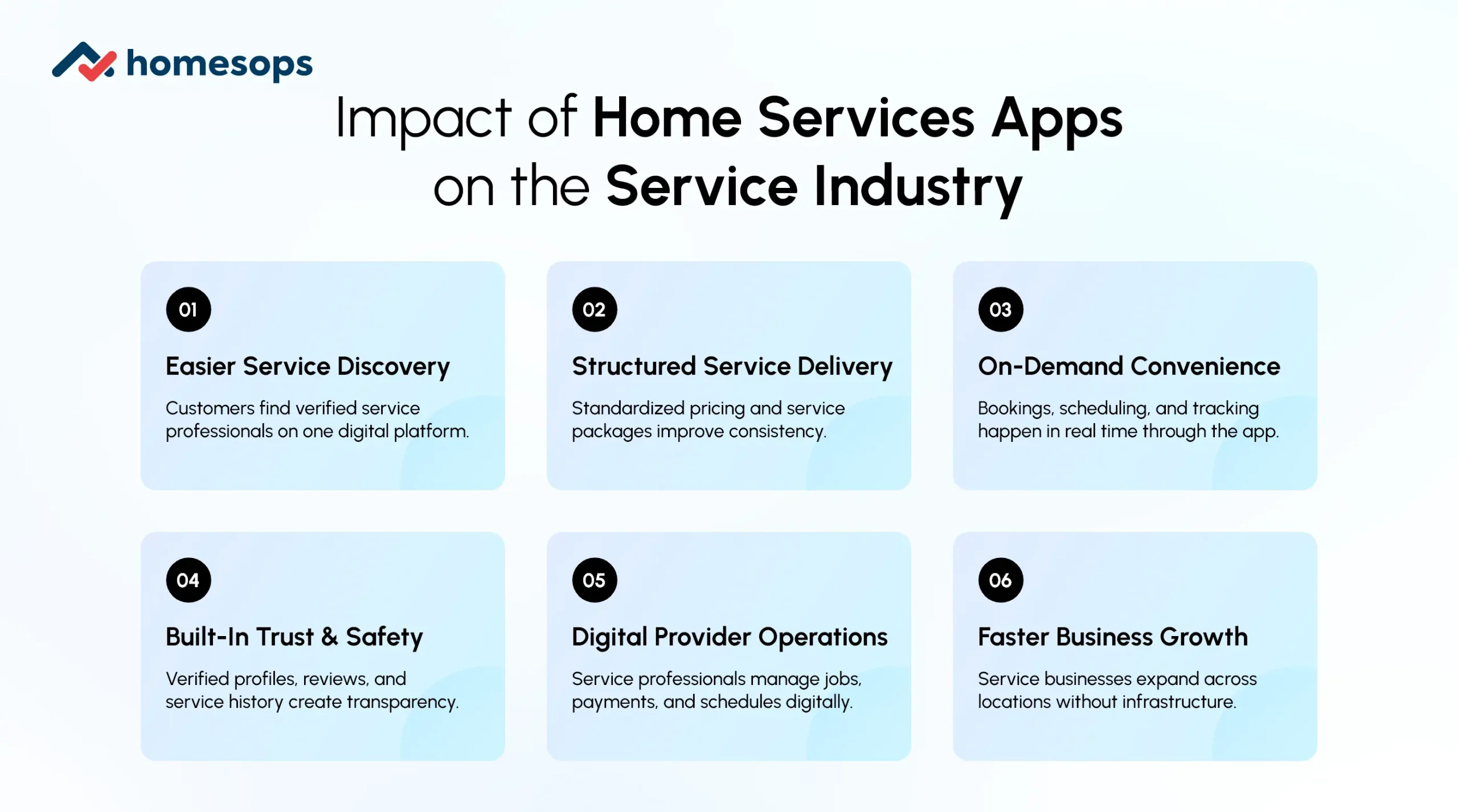
In practice, this means home services apps are steadily replacing traditional booking methods, not by removing human interaction, but by eliminating friction, delays, and uncertainty from the booking process. Customers no longer wait for callbacks or rely on informal recommendations; they book verified services instantly with clear pricing, availability, and accountability.
Across the home service app industry, these platforms are not just improving convenience they are redefining how services are discovered, delivered, monitored, and scaled.
Below are the key ways home services app transformation is actively changing the service industry.
1. Making it easier for customers to find services
Earlier, customers depended on word-of-mouth, local listings, or online searches with uncertain outcomes. Home services apps replace this with a single, trusted discovery platform.
With on-demand home service apps, customers can:
- Search for nearby service providers instantly
- Compare pricing, availability, and ratings in one place
- Choose professionals based on verified profiles and reviews
This improves decision-making and creates equal visibility for quality providers across the home service app industry.
Planning a Home Services App? Start With a Smarter Blueprint
If you’re exploring home service app solutions, don’t jump into development with a generic feature list. Start with service categories, pricing logic, provider onboarding, operational workflows, and trust mechanisms.
Want a Ready-to-build Roadmap for Your App Idea?
2. Bringing structure to unorganized service work
The service industry has long suffered from inconsistent pricing, unclear service scope, and quality variations. Home service app solutions introduce structure and standardization.
These platforms help by:
- Offering predefined service packages and add-ons
- Clearly outlining what is included in each service
- Using digital checklists to guide service execution
This consistency reduces misunderstandings, improves service quality, and strengthens trust between customers and service providers.
3. Turning home services into on-demand experiences
Home services were traditionally scheduled with flexible or uncertain timeframes. On-demand home service apps transform this into fast, predictable, and trackable experiences.
Apps now enable:
- Real-time booking with confirmed time slots
- Automated reminders and easy rescheduling
- Live tracking of service professionals during visits
This shift aligns home services with modern digital expectations set by ride-hailing and delivery apps.
4. Building trust through transparency and verification
Inviting a service professional into one’s home requires trust. Home services apps make trust visible and measurable.
As part of the home services app transformation, platforms provide:
- Verified service provider profiles and background checks
- Customer ratings and detailed reviews
- Job history, service photos, and digital records
- Platform-managed dispute resolution and support
This system makes the service industry safer and more reliable for both customers and professionals.
5. Digitizing daily operations for service providers
Beyond customer convenience, home service app solutions significantly improve how service providers manage their work.
Service professionals benefit from:
- Digital job assignments and scheduling
- Automated payments and earnings tracking
- Reduced idle time through smarter bookings
- Better customer retention via rebooking features
This operational shift helps transform skilled workers into organized, scalable service businesses.
6. Helping service businesses scale faster
Home services apps convert local service operations into scalable digital platforms. This is one of the most powerful changes within the home service app industry.
Through centralized systems, businesses can:
- Expand into new cities without physical offices
- Add new service categories quickly
- Manage supply and demand using real data
- Build recurring revenue through subscriptions and plans
This platform-based model unlocks growth opportunities that were previously difficult to achieve.
7. Driving digital transformation across the service industry
Together, these changes represent true digital transformation in the service industry. Home services apps are no longer just booking tools they are end-to-end service management platforms.
They are transforming:
- How customers discover and book services
- How providers work, earn, and grow
- How service companies scale and compete
This is why home services app transformation is becoming essential for any service business aiming to stay relevant in a digital-first economy.
The Service Industry’s Biggest Challenges Before Apps Arrived
To understand why apps are transforming home services, it helps to look at the old model and where it struggled:
1. Discoverability was limited
Customers relied on word-of-mouth or local directories. That meant great providers stayed invisible, and customers often chose whoever picked up the phone first.
2. Pricing was inconsistent
Without standardized pricing or clear scope definitions, customers felt uncertain. Providers spent time explaining costs repeatedly, and disputes happened too often.
3. Scheduling was messy
Back-and-forth calls, vague time windows, missed appointments, reschedules this was normal. It also created lost revenue and frustrated customers.
4. Trust was hard to establish
Customers invited strangers into their homes. Without background checks, ratings, or verified profiles, trust became the biggest barrier to booking.
5. Providers lacked operational tools
Many skilled technicians had no system for lead management, payments, route planning, or customer retention. Good work existed, but business growth stayed slow.
Home services apps didn’t just “digitize booking.” They rebuilt the experience end-to-end and that’s why this change is so significant.
What’s Fueling the Rise of on-demand Home Service Apps?
The growth of on-demand home service apps isn’t random. It’s powered by a few strong shifts happening together:
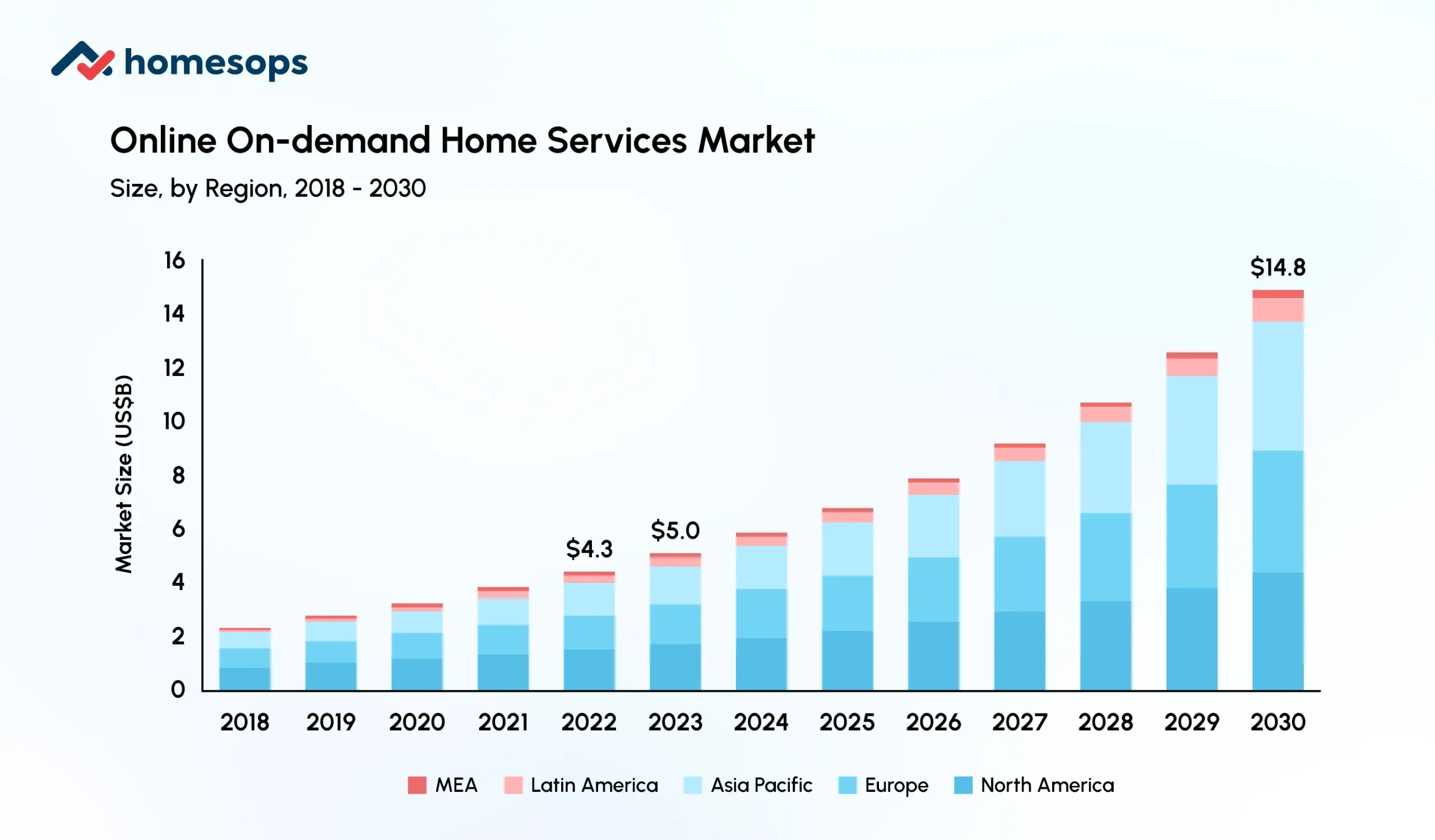
1. Customers now expect real-time experiences
People track deliveries, cabs, and groceries. Home services are now expected to follow the same standard: transparent pricing, time estimates, and updates.
2. People prefer self-serve convenience
Instead of calling multiple providers, customers want to browse services, compare reviews, pick a slot, and pay without waiting for callbacks.
3. Trust is built digitally
Ratings, verified IDs, job photos, warranties, and service histories create confidence. Trust becomes measurable, not based on luck.
4. Workforces are becoming app-driven
Gig and flexible work models are expanding. Many technicians now prefer a system that sends them jobs, helps with payments, and reduces downtime.
5. Service businesses want growth engines
Apps enable repeat bookings, subscriptions, referrals, cross-selling, and automated marketing. That turns one-time service calls into predictable revenue.
This is the real digital transformation in service industry where the platform becomes the operating system for service delivery.
How Do Home Services Apps Help Service Providers Grow Their Business?
By centralizing bookings, payments, customer communication, and reputation management, home services apps help providers reach more customers, improve utilization, generate repeat work, and scale predictably.
The New Operating Model: How Home Services Apps Actually Change the Game
Home services apps don’t just move the same workflow onto a screen. They restructure how service businesses operate.
1. They turn discovery into demand
Apps create a searchable service catalog. Customers find providers based on location, ratings, availability, pricing, and specialization. That means demand flows to quality more than marketing budgets.
2. They standardize service delivery
Many apps define scope through checklists, service packages, time estimates, and add-ons. Customers know what they’re buying. Providers know what they’re delivering. Less confusion, fewer disputes.
3. They make scheduling predictable
Availability calendars, automated confirmations, reminders, and rescheduling tools reduce friction for both sides. Providers can plan routes better, and customers get tighter time windows.
4. They professionalize small providers
Even a solo technician can look like a full organization with digital invoices, ETA tracking, job updates, and consistent customer communication.
5. They build trust at scale
Verified profiles, background checks, ratings, review moderation, job photos, and service warranties make “unknown provider risk” much smaller.
This is the core of home services app transformation, the industry moves from informal transactions to structured, trackable, trusted service commerce.
Key Categories Where Apps for Home Repair Services Are Growing Fastest
While the category is broad, apps for home repair services are especially strong in areas that are high-frequency, high-urgency, or high-trust.
Home repair and maintenance
- Electrical repairs, wiring, appliance fixes
- Plumbing leaks, pipe work, bathroom fittings
- Carpentry, furniture assembly, door/window repairs
Cleaning and hygiene services
- Home cleaning, deep cleaning, kitchen/bathroom sanitation
- Sofa, carpet, mattress cleaning
- Pest control and disinfection
HVAC and seasonal services
- AC installation, maintenance, duct cleaning
- Heating repairs and seasonal inspections
Renovation and improvement
- Painting, tiling, flooring, false ceiling
- Interior improvement, handyman projects
Beauty and wellness at home
- Salon services, massage, grooming
(These services follow similar booking mechanics and customer expectations.)
Each category benefits from app-driven convenience, but the strongest winners combine speed + trust + repeat usage.
The Most Important Benefits of Home Services Apps (For Customers and Providers)
Let’s break down the real benefits of home services apps beyond the obvious “easy booking.”
For customers
- Faster booking and verified availability: Customers can see slots, choose a time, and confirm instantly without phone tag.
- Transparent pricing and scope clarity: Packages, add-ons, and upfront estimates reduce uncertainty.
- Better trust and safety: Verified providers, reviews, ratings, service history, and customer support build confidence.
- Real-time updates: Tracking, arrival notifications, job status, and easy communication reduce anxiety.
- Digital payments and invoices: Secure payments, warranties, and service documentation stay in one place.
For service providers
- A steady pipeline of leads: No more slow days caused by lack of visibility. The platform keeps demand flowing.
- Less time wasted on coordination: Booking, reminders, payments, and customer communication become automated.
- Stronger repeat business: Rebooking, subscriptions, referral incentives, and saved service history improve retention.
- Better operations and earnings visibility: Dashboards show completed jobs, revenue, cancellations, and performance metrics.
- Reputation becomes a growth asset: High ratings and good reviews become the provider’s marketing engine.
In short, service provider booking apps create efficiency, trust, and repeatability the three ingredients the service industry always needed but rarely had.
What Features Make Home Services Apps Successful?
Great home service app solutions succeed because they cover the full journey: discovery → booking → service delivery → payment → support → rebooking.
Here are the features that matter most.
Customer-side essentials
- Service catalog with filters (location, price, rating, availability)
- Clear service packages, add-ons, and scope definitions
- Booking flow with calendar slots and time windows
- In-app chat/call masking for privacy
- ETA tracking and provider arrival notifications
- Digital payment options + invoices
- Reviews, ratings, and support tickets
- Rebooking and subscription plans for repeat services
Provider-side essentials
- Provider onboarding and KYC verification
- Profile management: skills, service areas, working hours
- Job acceptance/rejection and scheduling calendar
- Route optimization and location tracking (optional)
- Job checklist, before/after photos, notes
- Earnings dashboard, pay-out tracking, invoices
- Availability settings, leave management, cancellations handling
Admin-side essentials
- Provider verification and quality checks
- Service pricing and package management
- Commission rules, promotions, coupons
- Dispute management and refunds
- Analytics: demand peaks, cancellations, ratings, category performance
- CRM integrations and customer segmentation
- Fraud monitoring and misuse prevention
This ecosystem is what makes the digital transformation in service industry real: every action becomes trackable, measurable, and improvable.
Turn Features into a Scalable Service Engine
Every feature should reduce friction, increase trust, and simplify operations not just look good on screen. Build an app that truly runs your service business.
What “Transformation” Really Looks Like: Measurable Business Impact
This shift isn’t theoretical. Apps change the business model in practical ways:
1. Conversion rates improve
When customers see pricing, reviews, and slots instantly, fewer drop-offs happen. Decision time becomes shorter.
2. Provider utilization increases
With smart dispatching and better scheduling, providers spend less time idle and more time completing paid work.
3. Repeat revenue becomes predictable
Subscriptions (cleaning plans, maintenance packages), rebooking nudges, and seasonal reminders increase LTV (customer lifetime value).
4. Quality becomes enforceable
Platforms can track job completion rates, cancellations, ratings, and complaints. That creates performance standards without micromanaging.
5. Marketing becomes data-driven
Instead of generic ads, apps can retarget customers, promote specific categories during peak times, and launch city-based campaigns using real demand data.
That’s why home services app transformation is now seen as a competitive requirement, not an optional upgrade.
What Trends Are Shaping the Future of Home Services Industry Apps?
The home service app industry continues to evolve, and the next wave is already forming:
- Hyperlocal speed: Tighter ETAs and faster availability
- Membership bundles: Monthly plans for maintenance + priority service
- Smarter service recommendations: Based on home type, season, and history
- Better provider enablement: Training modules, micro-insurance, tool financing
- AI-powered support: Faster ticket resolution and dispute triage
- Deeper transparency: Live job updates, step-by-step status, service checklists
Customers are not going backward to phone calls. The new expectation is app-first service delivery.
Final Thoughts: The Service Industry is Becoming Platform-driven
Home services apps are not a trend they’re the new infrastructure of service commerce. They reduce friction, create trust, standardize quality, and unlock growth for providers who were previously limited by visibility and manual coordination.
From apps for home repair services to full-scale home services marketplace apps, the industry is shifting toward app-first experiences that customers now expect as standard.
Platforms like HomesOps reflect this shift by focusing on how services actually run scheduling, coordination, and accountability rather than flashy features.
And for businesses, this is the most practical form of digital transformation in service industry: building a system that improves efficiency, customer loyalty, and revenue predictability.
If you’re planning to enter the space or modernize an existing operation, invest in the right home service app solutions ones that support real operations, not just a booking form. The winners in this category won’t be the apps with the most features.
They’ll be the apps with the smoothest service experience, the strongest trust layer, and the clearest value for both customers and providers.
Build What the Service Industry Actually Needs
Design a home services app that fixes scheduling chaos, trust gaps, and operational bottlenecks at scale.
Frequently Asked Questions
A home services app connects customers with verified professionals, enabling service discovery, booking, scheduling, real-time tracking, digital payments, and post-service feedback through one platform.
Customers gain convenience, transparency, and trust, while service providers receive steady demand, automated scheduling, digital payments, and tools to manage operations efficiently and consistently.
Cloud infrastructure, mobile apps, GPS tracking, secure payments, AI-based scheduling, data analytics, and automation tools are driving smarter service matching, faster response times, and scalability.
Rising customer expectations, digital-first behavior, and demand for transparency make home service apps essential for delivering reliable, scalable, and standardized service experiences.
They automate bookings, optimize scheduling, reduce manual coordination, streamline payments, track performance metrics, and centralize customer communication across service workflows.
AI-driven demand forecasting, subscription-based services, hyperlocal dispatch, predictive maintenance, smarter provider tools, and deeper automation will reshape service delivery and business models.
Discuss Your Project
Latest Blogs
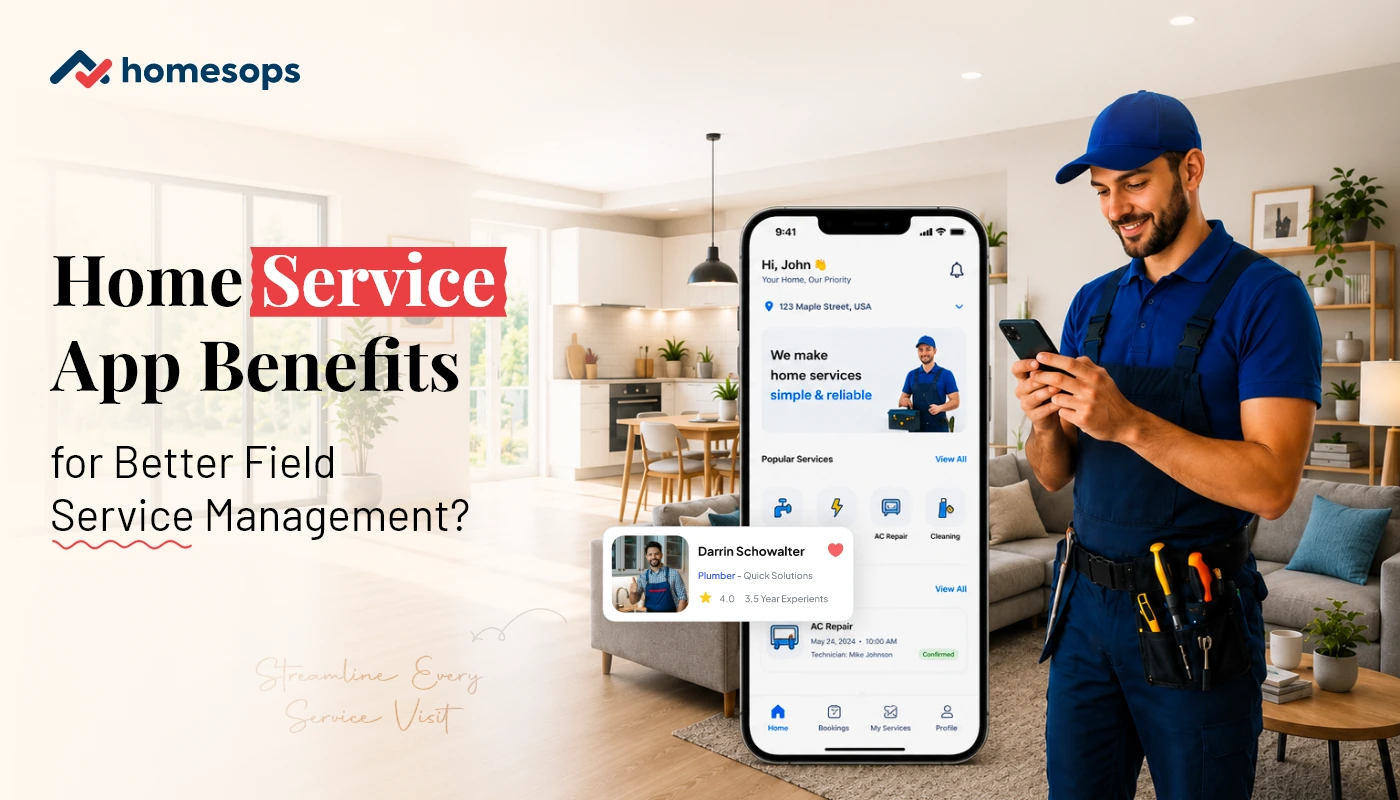
How Home Service Apps Improve Field Service Management Efficiency?
A home services app improves field service management efficiency by automating scheduling, dispatch, job tracking and customer communication, replacing manual processes that slow technicians down and cost businesses revenue. For HVAC, plumbing, roofing and handyman... Read more
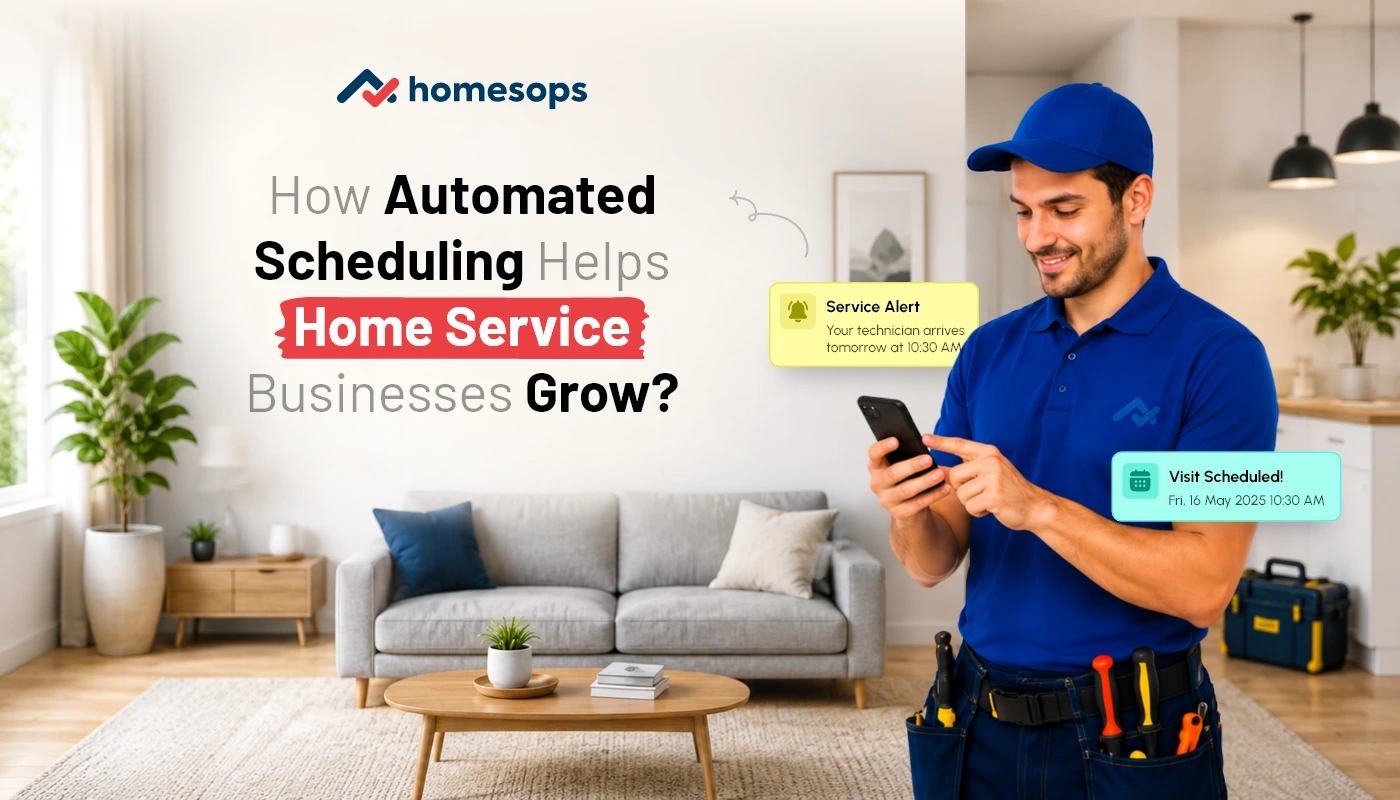
How Home Service Businesses Can Automate Booking and Scheduling?
Home service businesses can automate booking and scheduling by using a centralized platform that lets customers select services, view available time slots, confirm appointments, receive reminders and track technicians without calling the office. The same... Read more
How AI & Data Analytics Improve Customer Experience in Home Services Apps
Customer expectations in home services have changed. People no longer want to call multiple times, wait for vague arrival windows, explain the same issue again, or wonder when a technician will show up. They want... Read more